What Pores Are, and Why We Have Them
Pores are small openings on the skin’s surface. Each one connects to a hair follicle and a sebaceous gland.
The sebaceous gland produces sebum, the skin’s natural oil, which travels through the pore to reach the surface and keep skin lubricated and protected.
Everyone has pores. They are a functional part of skin anatomy, not a flaw or a sign of poor hygiene.
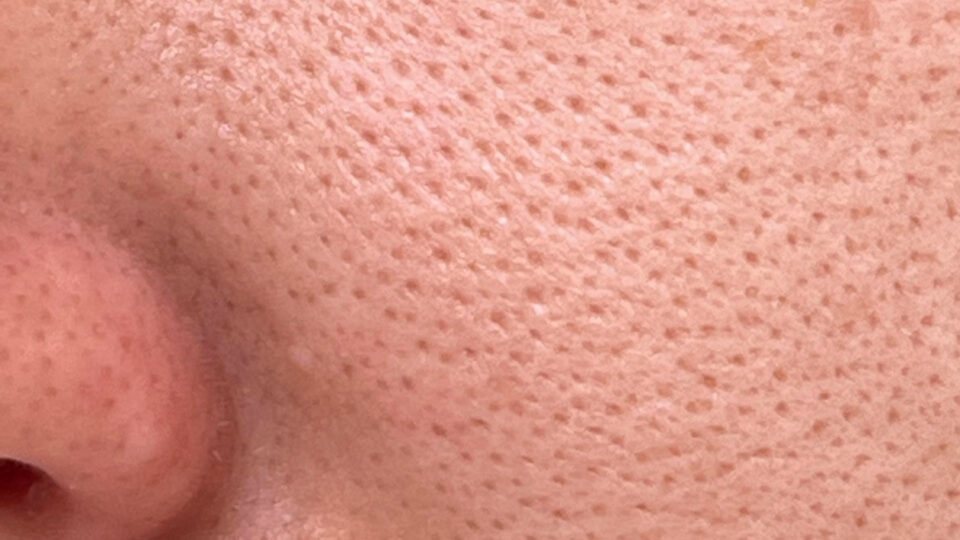
Enlarged or open pores typically appear as small circular or oval depressions on the skin, most commonly across the nose, cheeks and chin. In oilier skin types, they can look darker at the opening due to oxidised sebum and debris.
The size and visibility of your pores is influenced by a combination of genetics, skin type, age and environmental history.
Why Pores Can Look Larger Than They Are
Pores do not actually open and close, and they do not literally grow. What drives visible change is how prominent they appear, and several factors contribute to that.
Excess Sebum, Congestion and Blackheads
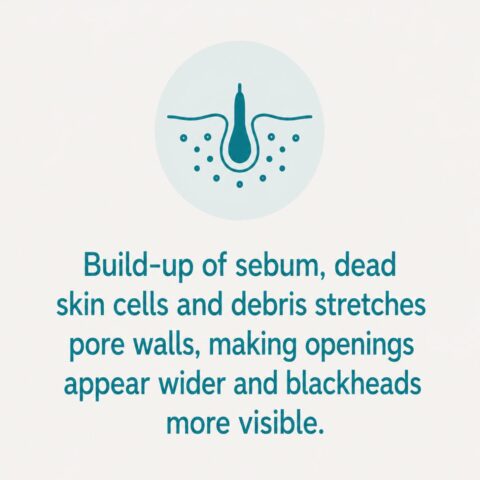
When sebum, dead skin cells and environmental debris accumulate at a pore opening, the walls stretch outward.
The pore does not get bigger, but the visible opening appears wider.
When that build-up oxidises at the surface, it darkens and becomes what most people recognise as a blackhead. Blackheads are not dirt, they are simply oxidised sebum sitting in an open pore.
This is most common in oily and combination skin types, where sebum production is higher. It can also be worsened by using products that are too heavy for your skin type or that are not properly removed at the end of the day.
If congested skin is a concern alongside pore visibility, our article on Congested Skin: Causes and Professional Treatments covers this in detail.
Sun Damage
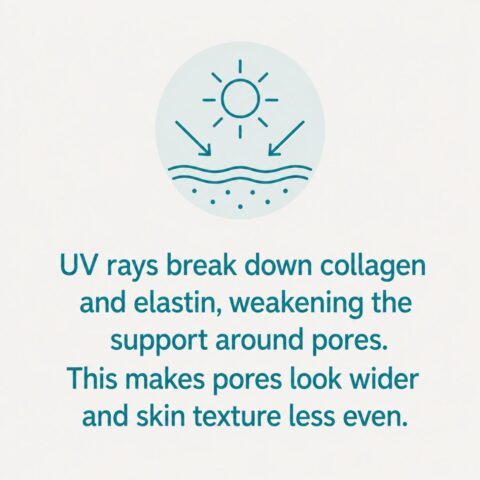
UV exposure is one of the most significant and most overlooked drivers of open pore appearance.
Living on the Sunshine Coast means UV is a year-round factor, not just a summer one.
UV rays break down collagen and elastin, the structural proteins that form the walls around each pore. When that support weakens, pores lose their tight, round shape and appear wider and less defined.
Sun damage also contributes to broader skin texture changes that make pores more visible overall.
You can read more about how UV affects the skin in our guide to Pigmentation and Sun Damage and Uneven Skin Tone and Texture.
Collagen Loss and Ageing
Yes, pores can appear to get bigger with age. Collagen production gradually slows as skin matures, and skin becomes less dense and loses some of its firmness.
Yes, pores can appear to get bigger with age. Collagen production gradually slows as skin matures, and skin becomes less dense and loses some of its firmness.
The walls around pore openings become less taut, so pores appear larger even without any change in oil production.
This is why pore visibility tends to increase through the thirties and forties, even in people who did not previously notice them.
Genetics and Skin Type
Some people are simply more predisposed to visible pores, particularly those with naturally oilier skin or larger sebaceous glands.
This is a physical reality that cannot be changed. What can change is how the skin around those pores looks and behaves, and how much the pores are stretched by congestion or weakened by UV damage.
Dehydration and a Compromised Skin Barrier
This one surprises many people. Dehydrated skin, including oily skin that is dehydrated, can look rough and uneven on the surface, which makes pore openings more obvious.
A compromised skin barrier also affects how sebum behaves at the surface. Keeping skin well-hydrated is part of the management strategy, not a contradiction of it.
The Truth About Pore Size: What You Cannot Change
No product or treatment can permanently close or eliminate a pore. Anything marketed as a “pore eraser” or a solution to “shrink” pores should be approached with scepticism.
Good treatments reduce pore appearance by addressing the factors that make them look prominent: clearing congestion, rebuilding the skin’s structural support, improving texture and reducing the cumulative effects of sun damage.
That is a meaningful and achievable outcome, but it is different from altering the physical structure of the skin.
What Professional Treatments Can Help
There is a clear difference between home care that manages pore appearance day-to-day and clinical treatments that work at a deeper level.
The following are the professional options available at The Cosmetic Studio Noosa that address the underlying drivers of open pore visibility.
Dermapen Skin Needling
Dermapen Skin Needling stimulates new collagen and elastin by creating controlled micro-channels in the skin.
Over a course of treatments, the walls around open pores become firmer and better defined, with visible improvement in overall skin texture.
Salicylic and Medical-Grade Peels
A Salicylic Peel works well for congested and oily skin, penetrating deep into the pore to dissolve the build-up that stretches its walls.
Broader options like the Cosmo Peel Forte and VI Peel address overall skin quality and texture. All Medical Grade Peels at The Cosmetic Studio Noosa are selected and supervised by our registered nurses.
Genius RF Microneedling
Genius RF combines skin needling with radiofrequency energy for deeper tissue remodelling.
It is particularly suited to clients where both open pore visibility and skin laxity are concerns, as it addresses both in a single treatment.
Skin Boosting Treatments
Where hydration, skin barrier health or declining skin density are contributing factors, Skin Boosting Treatments support the skin’s quality from within, changing how open pores present at the surface.
Laser Rejuvenation
Laser Rejuvenation addresses sun-related damage to the skin’s support structure, texture and tone.
It is often used alongside other treatments where significant UV history is a factor.
For a detailed breakdown of how each treatment works and what results to expect, our companion article What Is the Best Treatment for Enlarged Pores? covers this in depth.
At-Home Care That Supports Your Results
Professional treatment works best when supported by consistent home care.
Daily SPF 50+ is non-negotiable in Queensland. UV exposure degrades the skin’s support structure faster than almost any other factor, and it undoes clinical results if it is not managed.
A gentle, non-comedogenic cleanser removes excess oil and build-up without stripping the skin barrier. Over-cleansing triggers rebound oiliness, which worsens open pore appearance.
Niacinamide helps regulate sebum production and has a visible effect on pore appearance with consistent use. Retinol supports cell turnover and overall skin quality over time.
A lightweight moisturiser, even on oily skin, keeps the skin barrier healthy and prevents the dehydration that makes pore texture worse.
When to Seek a Clinical Assessment
If you have been addressing open pore visibility consistently with home care and are not seeing the improvement you want, a professional skin assessment is a practical next step.
At The Cosmetic Studio Noosa, open pore visibility is one of the most common concerns our registered nurses assess across all skin types and ages. They review your skin type, oil production, congestion levels, UV history and signs of skin density change to understand what is actually driving your concern.
A treatment plan is then built around your specific skin, not a generic category.