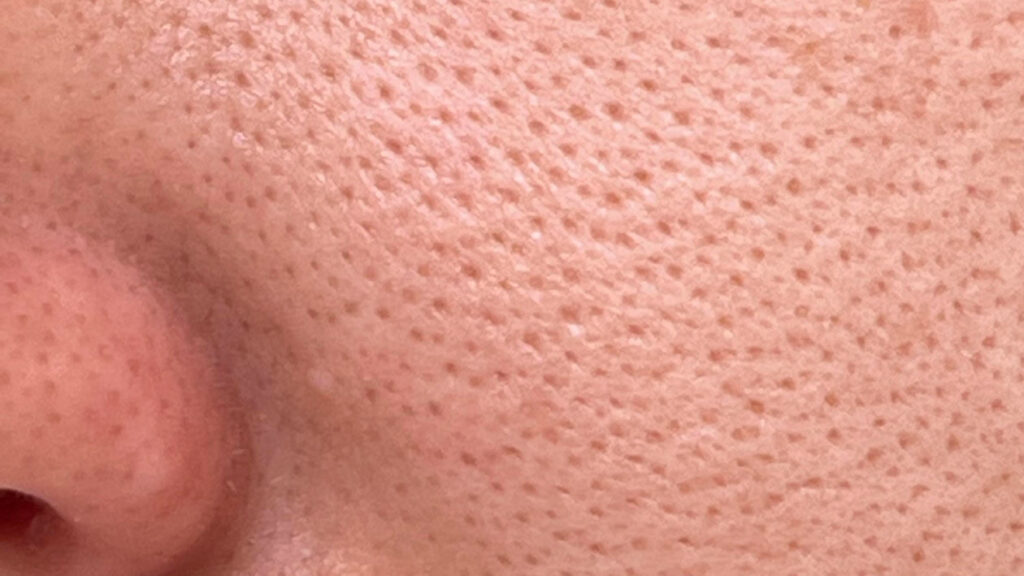
What causes enlarged pores?
Before exploring treatment options, it’s essential to understand why pores become enlarged in the first place. Pores are small openings in the outermost layer of skin that release oils and sweat, with their size largely determined by genetics. However, several factors can contribute to their enlargement over time. For a deeper look at the causes, our guide on why pores look larger and what genuinely helps covers this in detail.
- Excessive oil production stands as a primary contributor, as sebum combines with dead skin cells to clog pores, causing them to stretch and appear larger.
- Sun damage accelerates this process by breaking down collagen, further compromising the skin’s ability to maintain tight pores.
- Age-related loss of skin elasticity and collagen support weakens the structural integrity surrounding pores, making them appear more prominent.
Additionally, individuals with acne-prone skin or a history of squeezing pimples typically experience more visible pores, particularly in sebaceous areas like the nose and upper lip.
The pore enlargement process often begins when makeup, dirt, or oil combine within the pore, creating blockages that stretch the pore walls. Tiny cells combine with excess sebum and collect around the inside edge of pores, resulting in thickening that causes the pore’s diameter to expand in a cone shape, creating a larger opening on the skin’s surface.
Recent 3D imaging research has quantified how pores evolve with age, finding that pores expand radially at approximately 0.8% annually after age 30.
This study revealed distinct morphological differences between age groups: younger individuals (20s) typically display isolated circular pores measuring 80-120μm in diameter, while older individuals (50+) develop elongated ‘dumbbell-shaped’ pores (250-400μm) that often interconnect via epidermal troughs.
This scientific evidence explains why treatment approaches must be adjusted according to age and why combination therapies are often necessary for older patients whose pore concerns involve both the pore structure itself and surrounding skin laxity.
Understanding these mechanisms helps explain why treatments targeting oil control, exfoliation, and collagen production prove most effective in addressing this concern.
Professional Treatment Options for Enlarged Pores
Microneedling and Collagen Induction Therapy
Microneedling has emerged as a highly effective skin-rejuvenation treatment for reducing the appearance of enlarged pores. This process involves using a device to create tiny controlled punctures in the skin, triggering the body’s natural healing response and promoting collagen and elastin production.
As collagen levels increase, the skin becomes smoother and firmer, with improved texture and smaller-appearing pores. Professional micro needling treatments, like those offered at The Cosmetic Studio Noosa, offer significant advantages over at-home derma rollers, including greater precision, adjustable needle depths, and sterile conditions that minimise infection risk.
Modern micro needling treatments often incorporate additional technologies for enhanced results. RF microneedling, for example, combines traditional microneedling with radiofrequency energy to further stimulate collagen production at deeper skin layers. This combination approach proves particularly effective for addressing enlarged pores and acne scarring, with minimal downtime compared to more aggressive laser treatments.
Chemical Peels and Specialised Treatments
Chemical peels represent another professional treatment category that effectively addresses enlarged pores by promoting cellular turnover and collagen production. For particularly deep or resistant pores, a medical-grade peel such as a TCA peel offers targeted treatment by depositing small amounts of TCA directly into enlarged pores.
This specialised approach works by creating a chemical reaction that leads to the formation of new collagen fibres, increasing the height of treated pores by 20-40% per procedure. Most patients require two to three procedures followed by RF resurfacing for optimal results.
More moderate chemical peels, including those containing glycolic, lactic, salicylic, or fruit acids, prepare the skin for deep exfoliation by triggering a natural inflammatory response that promotes healing and renewal. These treatments effectively reduce the appearance of pores while addressing related concerns like uneven texture and minor pigmentation issues.
At-Home Treatment Options
Retinoids and Retinol Products
Retinoids and retinol stand among the most scientifically validated ingredients for addressing enlarged pores through at-home skincare. These vitamin A derivatives work by stimulating collagen production and strengthening the walls of pores, which often weaken with age and sun exposure. When collagen weakens, so does the lining of pores, making them appear larger; retinoids counteract this process by reinforcing the supporting structure.
Surface-Level Action vs. Deep Structural Changes
Retinoids and retinol products work primarily through specific cellular mechanisms that, while beneficial, have inherent limitations when addressing enlarged pores. These vitamin A derivatives promote cell turnover, stimulate modest collagen production, and help regulate oil production, all factors that can improve the appearance of pores.
However, a critical limitation exists in their mechanism of action: “While Retinol can’t physically shrink the size of pores, it can make them appear smaller. By keeping the pores clean and improving the overall texture of the skin,” retinol creates an optical improvement rather than a structural one.
This fundamental limitation stems from retinoids’ primarily surface-level action. Though retinoids do penetrate the skin, they cannot reach the deeper structural elements that professional treatments target.
Retinol encourages the rapid shedding of dead skin cells and revealing bright, healthy-looking ones,” which addresses the surface manifestation of enlarged pores but not their underlying structural causes.
Exfoliating Acids and Active Ingredients
Exfoliating acids represent another cornerstone of effective at-home pore treatment. Alpha hydroxy acids (AHAs) like glycolic acid and beta hydroxy acids (BHAs) like salicylic acid help regulate skin oiliness and reduce the buildup of dead skin cells and sebum in pores.
Glycolic acid works primarily on the skin’s surface to loosen dead cells, while salicylic acid penetrates more deeply into pores to dissolve oil and debris.
Products containing niacinamide (vitamin B3) provide additional benefits by reducing sebum production, thereby minimising the appearance of enlarged pores. For optimal results, these active ingredients should be incorporated into a consistent skincare routine, with gradual introduction to prevent irritation and sensitivity.
It is important to note that the results achieved by using these over-the-counter products will not match what is available via professional treatments. Professional treatments offer customisation capabilities that exceed what is possible with over-the-counter products alone.
Different professional modalities can target specific aspects of pore concerns related to oil production, collagen support, or textural irregularities. This tailored approach allows the Registered Nurses at The Cosmetic Studio Noosa to address the unique factors contributing to enlarged pores in each patient.
Creating a Pore-Minimising Routine at Home
While professional treatment delivers more dramatic and longer-lasting results, here is an at-home routine that can help maintain pore health.
- Morning: Use a gentle cleanser, exfoliating toner (with AHA/BHA), lightweight moisturiser, and oil-free sunscreen.
- Evening: Double cleanse (oil cleanser followed by water-based cleanser), retinol treatment (building up frequency gradually), and water-based moisturiser.
- Weekly additions: Clay or charcoal mask 1-2 times per week, steam treatment before mask application for enhanced benefits.
While completely eliminating large pores isn’t possible due to genetic factors, implementing these evidence-based at-home strategies can significantly reduce their appearance and prevent clogging.
The professional treatments offered by The Cosmetic Studio Noosa provide the most significant structural improvements to your skin, yielding more pleasing and longer-lasting results for large pores. Learn more about how we approach enlarged and open pores as an area of concern.